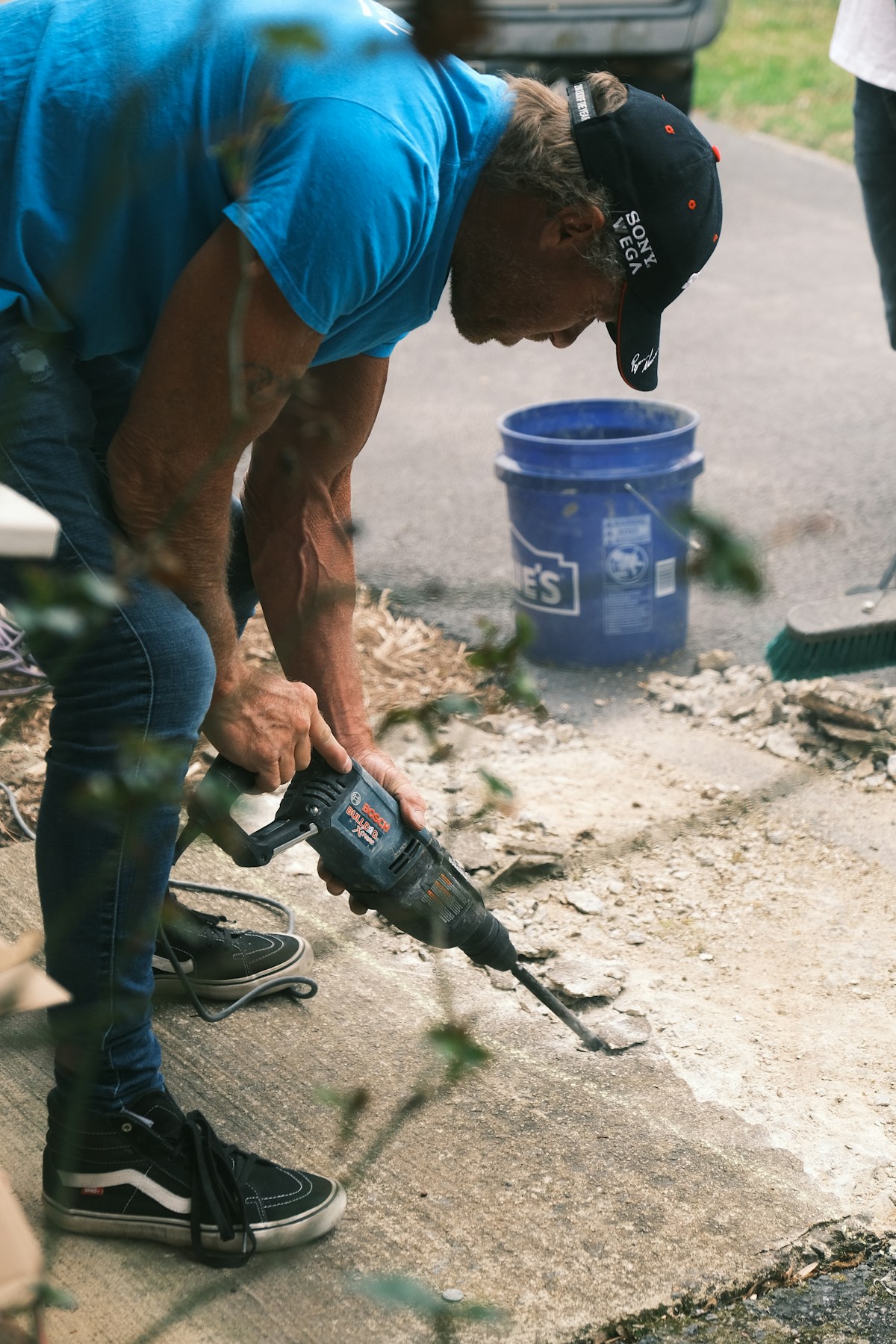
The HSE estimates that approximately 500 construction workers die each year from occupational lung disease caused by silica dust exposure — more than the combined fatalities from falls, struck-by, and all other construction accidents. Core drilling is one of the highest-exposure activities in the construction sector when performed without extraction, because the core barrel concentrates dust at a single point and the entry and exit of the cutting face generates a continuous high-concentration plume.
This is not a marginal risk requiring specialist assessment. Every core drilled through concrete, brick, blockwork, or stone produces respirable crystalline silica. The legal requirement to control the exposure applies to commercial operations and is enforceable. This guide sets out what is required and what the equipment options are.
What Makes Core Drilling Dust Particularly Hazardous
Not all dust is silica dust, and not all silica dust is equally hazardous. What matters for respiratory risk is the respirable fraction — particles small enough to penetrate to the deepest part of the lung (the alveoli) where they cannot be expelled. Particles smaller than 10 microns reach the alveoli. Particles smaller than 4 microns are the most hazardous fraction.
Diamond core drilling through concrete generates a very high proportion of fine-particle dust because the diamond cutting action produces a much finer arisings than hammer drilling or saw cutting. The core barrel then acts as a chimney — the suction created by the rotating barrel draws dust up through the barrel and out at the machine end, straight toward the operator's face. Without extraction, the operator's breathing zone is in the highest-concentration zone on the site.
The Legal Position in the UK
The Control of Substances Hazardous to Health Regulations 2002 (COSHH) require employers to:
- Assess the risk from RCS exposure for any work activity that creates dust from silica-containing materials.
- Prevent or adequately control exposure.
- Monitor exposure if adequate control cannot be confirmed by other means.
- Conduct health surveillance for employees at risk.
The Workplace Exposure Limit for respirable crystalline silica is 0.1 mg/m³ as an 8-hour time-weighted average. Studies have shown that core drilling without extraction can exceed this limit within minutes. COSHH also requires that engineering controls (extraction) are used in preference to respiratory protective equipment (masks) — a mask alone does not constitute adequate control under COSHH unless engineering controls are not reasonably practicable.
For construction sites covered by CDM 2015, the principal contractor is responsible for ensuring that all contractors on the site comply with COSHH requirements for dust. The relevant HSE guidance document is CIS36 — "Construction information sheet: silica dust".
Vacuum Class M vs Class H
Industrial vacuums used in construction are classified under IEC 60335-2-69 by their filtration efficiency for hazardous dusts:
- Class L (Low): For nuisance dusts with an OEL above 1 mg/m³. Not suitable for silica dust.
- Class M (Medium): For dusts with an OEL at or above 0.1 mg/m³ — which includes RCS. Class M is the minimum legal standard for concrete and masonry core drilling dust extraction. Filtration efficiency ≥99.9% for particles ≥0.3 microns.
- Class H (High): For carcinogenic dusts with an OEL below 0.1 mg/m³, and for asbestos. Filtration efficiency ≥99.995% for particles ≥0.3 microns. Required where asbestos contamination is suspected or confirmed.
For standard core drilling in concrete, brick, and blockwork, Class M is the required minimum. Class H is required where the substrate may contain asbestos-cement (common in some pre-1999 UK construction products including older floor tiles, cement boards, and insulation boards). If asbestos is confirmed or suspected, stop work and contact a licensed asbestos removal contractor — core drilling through asbestos-containing material is not a task for standard tradespeople.
Dust Shrouds for Core Drilling
A dust shroud is a rubber or flexible plastic collar that fits around the diamond core bit and seals against the work surface, creating an enclosed cutting zone that connects to a vacuum extraction hose. It captures dust at the point of generation rather than relying on the vacuum to pull dispersed dust from the air.
Key specification points for core drill dust shrouds:
- Must be compatible with the core bit diameter — most shrouds cover a range (e.g., 40–130mm) and seal against the barrel rather than fitting tightly to the bit OD.
- The vacuum connection should be at least 35mm diameter for effective extraction during coring. Smaller connections restrict airflow and allow dust to bypass the shroud.
- Check that the shroud depth allows the full core depth to be cut without the shroud contacting the work surface and preventing forward movement. Some shrouds have a maximum cutting depth of 50mm, which is insufficient for cavity wall penetrations.
Shroud systems are available from tool accessory suppliers including ITS, Toolden, Makita, and Hilti. Many core drill machines have a 35mm or M16 dust extraction connection built into the side handle specifically for this purpose.
Wet Coring as an Alternative
Wet diamond core drilling suppresses dust by wetting the arisings at the cutting face, preventing the fine particle fraction from becoming airborne. Where wet coring is technically appropriate (hard concrete, reinforced slabs), it provides very effective dust suppression alongside the cooling benefit. The dry vs wet core drilling guide explains the material conditions where wet coring is the technically correct choice anyway — the dust suppression benefit is an additional advantage.
Note: wet coring does not eliminate all silica exposure. The slurry produced still contains silica particles in suspension. Handling wet slurry without gloves allows dermal exposure, and slurry splash can produce secondary aerosol exposure. Wet coring must also be combined with appropriate slurry disposal — it is classified as controlled waste under the Environmental Protection Act 1990.
Respiratory Protective Equipment (RPE)
As noted above, COSHH requires that engineering controls (extraction) are used first. Where extraction is not practicable for a specific task, RPE is the fallback. For RCS, the minimum RPE is:
- FFP3 disposable half mask: Assigns a protection factor of 20 — meaning it reduces the concentration at the breathing zone to 1/20th of the ambient concentration. This is the standard recommendation for short-duration coring without extraction.
- P3 half mask with replaceable filter: The reusable version of FFP3 protection. More economical for regular use.
- Powered air purifying respirator (PAPR) with P3 filter: Provides the highest practical protection factor (500+) and is required where ambient RCS levels are very high (demolition of concrete structures, long-duration coring in confined spaces).
Do not use standard paper dust masks (FFP1 or unrated) for any silica-dust-generating operation. They do not provide adequate protection for RCS. The full core drilling safety guide covers all PPE requirements including eye, hearing, and vibration protection alongside respiratory protection.
Practical Setup for UK Domestic Trade Work
For a plumber, electrician, or builder drilling 2–5 core holes per job in brick or block on a domestic installation:
- Fit a dust shroud to the core bit (compatible with the bit size in use).
- Connect the shroud to a Class M vacuum via a 35mm hose.
- Switch on the vacuum before starting the drill.
- Drill normally — the extraction handles dust at source.
- When the vacuum bag/filter shows load (typically indicated by a filter clog warning), stop and replace the filter. Do not open the vacuum to check the bag in the work area — fine dust will re-enter the air. Take it outside or to a disposal area first.
The total equipment cost for a Class M vacuum, shroud, and hose is between £150 and £400 depending on the vacuum brand. For the core drill accessories that complement an extraction setup — including shrouds, extension adaptors, and hose connectors — see the full accessories guide.